Why Fashion Ecommerce Brands Need a Full-Funnel View of Data
Learn why fashion ecommerce brands need a full-funnel view of data to improve acquisition, retention, and long-term profitability.
Every day, fashion e-commerce companies produce enormous volumes of data, from website visits and ad clicks to returns and repeat purchases. However, a lot of leadership teams continue to assess success using discrete measures like daily revenue, ROAS, or conversions.

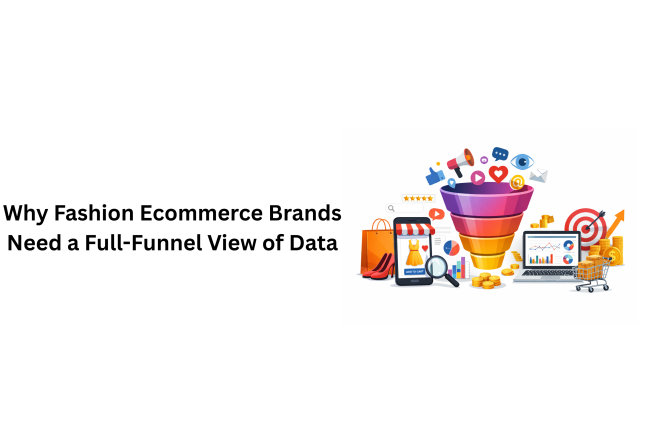
To scale sustainably, fashion ecommerce brands must move beyond siloed reporting and adopt a fashion ecommerce full-funnel view of data. This method transforms disjointed insights into strategic clarity by illuminating the consumer journey via awareness, consideration, conversion, and retention.
The Problem with Siloed Data in Fashion Ecommerce
The majority of fashion firms monitor data in fragments. CRM teams monitor retention, e-commerce teams concentrate on conversion rates, and marketing teams examine ad performance. Even if each metric is useful, none of them can provide a complete picture on its own.
In the absence of a full-funnel approach to fashion e-commerce, brands frequently misinterpret results. Low-quality demand could be concealed by high traffic. Poor retention may be concealed by strong first-time sales. Short-term decision-making and unproductive spending result from these blind spots.
What a Full-Funnel View of Data Really Means
Every step of the client experience is connected by a full-funnel data view. It provides solutions to important queries like:
-
Where do consumers initially learn about the brand?
-
Which touchpoints affect consumers' decisions to buy?
-
What motivates long-term value and repeat purchases?
A fashion e-commerce full-funnel model creates a single, cohesive perspective of growth by integrating data from several channels, including paid media, website analytics, CRM, and post-purchase engagement.
How Full-Funnel Data Improves Acquisition Decisions
At the top of the funnel, data gives marketers insight into relevance as well as reach. Monitoring audience quality, assisted conversions, and engagement data reveals which ads are drawing in high-intent customers.
This insight helps fashion e-commerce firms avoid overinvesting in traffic that appears good but ultimately fails to convert. A full-funnel strategy for fashion e-commerce guarantees that acquisition efforts are assessed using downstream impact rather than vanity measures.
Why Conversion Data Alone Is Not Enough
Sales numbers and conversion rates are frequently regarded as the ultimate measures of success. But they merely capture a single point in a much longer journey.
Friction points like product page drop-offs, cart abandonment, or lack of trust signals are highlighted by full-funnel data. Fashion brands may maximise experience rather than merely results by examining these phases collectively. One of the main benefits of a full-funnel fashion e-commerce approach is this.
Retention Data: The Most Overlooked Growth Lever
Profitability is predicated on retention, yet it is frequently underestimated. Purchase frequency, client lifetime value, and repeat business all offer crucial information about the health of a brand.
Leaders may determine which acquisition sources produce repeat consumers and which just produce one-time purchasers by using a full-funnel data view. Retention metrics in a fashion ecommerce full-funnel framework are closely linked to merchandising and marketing choices.
Why CEOs Need a Full-Funnel Data Perspective
Full-funnel data facilitates improved strategy planning for CEOs and corporate executives. It lessens reliance on short-term campaign results, enhances forecasting, and unites teams around common KPIs.
More significantly, a fashion ecommerce full-funnel view allows for more intelligent capital allocation, guaranteeing that funds are allocated to projects that produce long-term value rather than short-term growth spikes.
Turning Data into a Competitive Advantage
Unifying their data gives fashion e-commerce companies more than just visibility, it gives them control. Continuous optimisation, quicker decision-making, and improved customer relations are all made possible by full-funnel analytics.
Brands that comprehend the entire client journey will do better than those pursuing discrete KPIs as competition heats up.
In conclusion
Growth is driven by context, not just data. Fashion e-commerce companies run the danger of optimising for the wrong results if they don't have a full-funnel approach.
Leaders can transition from reactive reporting to proactive, scalable, long-lasting growth plans by using a fashion ecommerce full-funnel view of data.
What's Your Reaction?